
Case Management For Lawyers and Legal Teams
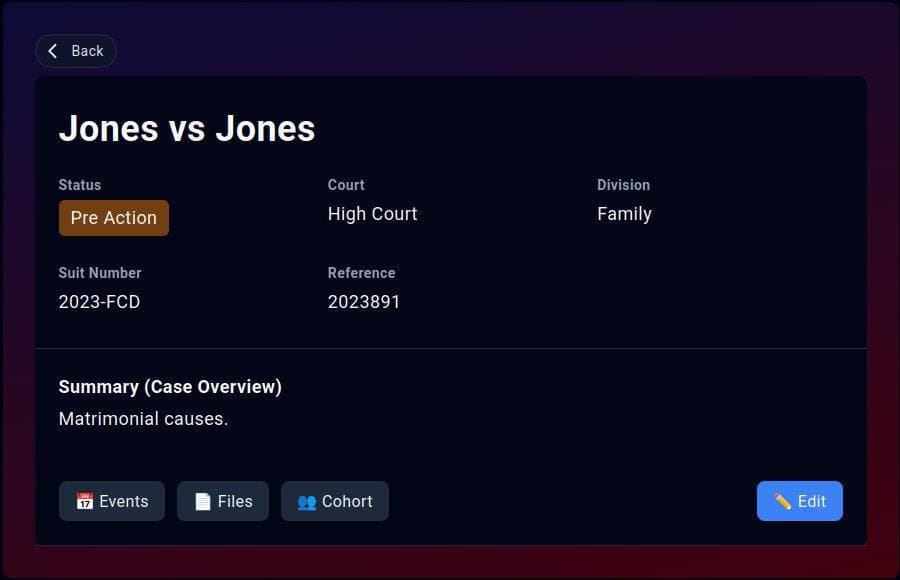
Lexkeep case management helps lawyers and law firms organise matters and manage documents and evidence. Track deadlines, assign tasks, and collaborate securely in cohort-based workspaces with granular access controls and audit trails.
Case management in legal practice is not just about tasks and calendars. It’s about controlling who can access what, keeping a clean record of what was shared and when, and maintaining a defensible chain of custody for documents, audio, and video evidence across the life of a matter.
Traditional tools—email threads, shared drives, and ad‑hoc folder links—often break down when a case expands to include co‑counsel, experts, clients, investigators, or regulators. Access becomes messy, copies proliferate, and it becomes difficult to prove later who had the “original” and what changed.
Lexkeep Cohorts are designed to solve that specific problem: matter-based case management with security, auditability, and integrity built in.
What Is a Cohort in Lexkeep?
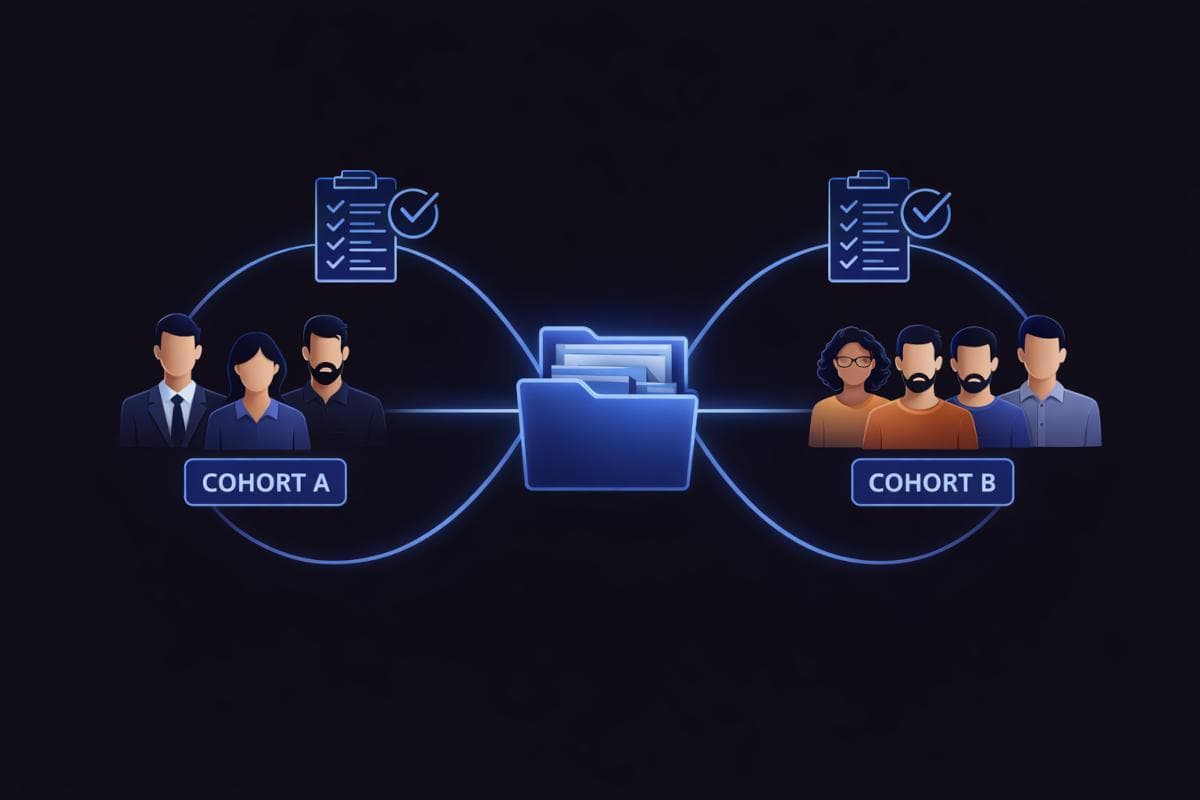
A Cohort is a structured collaboration space tied to a legal matter, deal, investigation, or practice group. Think of it as a secure “case room” where you can:
- store evidence and records in one place
- control access with clear roles
- collaborate internally and externally without losing track of versions
- produce an auditable history of evidence handling
You can create cohorts for:
- a specific litigation matter (Claimant/Defendant teams, co‑counsel)
- an internal investigation or regulatory review
- a transaction or deal team (M&A, real estate, financing)
- an internal department workflow (compliance, HR, IP)
Why Case Management Fails Without Access Control and Auditability
Most legal teams already have a “case folder” somewhere. The problem is that typical storage and case tools may not reliably answer questions that become critical later:
- Who uploaded this document?
- Who accessed or shared it?
- Was it altered after it was received?
- Can we prove when this version existed?
- Can we provide a defensible chain-of-custody narrative?
When those questions arise, firms often scramble to reconstruct history across email systems, personal devices, and cloud links.
Cohorts reduce that risk by making the case workspace the primary place where evidence enters, is handled, and is shared.
Cohorts vs. Folders: The Key Difference
Folders organize content. Cohorts organize people, permissions, and accountability around a matter.
A Cohort gives you:
1) Role-based permissions
You can assign roles such as:
- Admin – manage the cohort, members, permissions
- Editor/Uploader – upload and manage case files
- Viewer – view and download (or view-only, if configured)
This makes it easy to onboard co‑counsel, clients, and experts without giving them access to other matters.
2) Clean collaboration boundaries
Cohorts help prevent the common failure mode of “one link becomes a permanent door.”
You can:
- add or remove members as a matter evolves
- keep different matters separated even for the same people
- reduce accidental cross‑sharing between clients or disputes
3) A defensible audit trail
Cohorts are designed to maintain a record of key events (uploads, shares, certificate generation). That record supports later explanations to clients, regulators, or courts—especially in evidence-heavy matters.
Cohorts + Cryptographic Integrity: Proving the File Hasn’t Changed
Case management becomes stronger when you can prove integrity, not just store files.
In Lexkeep, each uploaded file can be protected through:
- Encrypted storage (AES‑256 at rest, TLS in transit)
- Optional end‑to‑end encryption (E2EE) for highly sensitive matters
- Blockchain anchoring of file fingerprints (Keccak‑256) for tamper‑evident proof of existence and timing
This matters for documents and recordings that might later be challenged as edited or backdated.
Optional E2EE Within Cohorts (When Confidentiality Must Be Absolute)
Not every matter needs end‑to‑end encryption. But some do—especially when the sensitivity is extreme:
- privileged legal advice and strategy documents
- whistleblowing and internal investigations
- regulatory probes and enforcement risk
- sensitive client data in cross-border matters
With Lexkeep’s optional E2EE, files can be encrypted on the user’s device before upload so that only authorised recipients can decrypt. Lexkeep stores ciphertext and cannot access plaintext.
Cohorts then become a controlled space for sharing that E2EE-protected content with the right participants.
Practical Use Cases for Lexkeep Cohorts
Litigation and disputes
- create a cohort per matter
- store pleadings, exhibits, recordings, transcripts
- share with co‑counsel and experts
- generate File Integrity Certificates for key exhibits
Corporate investigations
- restrict access to a small cohort
- use E2EE for sensitive documents
- maintain a clean audit trail for regulators
Transactions and closing packs
- store executed documents and key drafts
- prove integrity and timing for critical versions
- share with client deal teams under clear permissions
Expert work and external collaboration
- give experts access to selected evidence without exposing other matter files
- revoke access when the engagement ends
- keep the evidence-handling record intact
What a Cohort-Based Workflow Looks Like
A typical workflow is simple:
- Create a cohort for the matter (e.g., “ABC Plc v XYZ Ltd – 2026”).
- Invite participants and assign permissions (Admin/Editor/Viewer).
- Upload files (optionally with E2EE enabled).
- Anchor integrity proofs and maintain a case audit record automatically.
- Generate File Integrity Certificates when you need to disclose or file evidence.
This reduces friction while raising the evidentiary quality of your record-keeping.
Conclusion: Case Management That Improves Trust, Not Just Productivity
Case management isn’t only about being organized—it’s about being defensible.
Lexkeep Cohorts bring together:
- matter-based collaboration
- controlled access
- encrypted storage
- optional E2EE confidentiality
- cryptographic integrity and timestamping
- auditable evidence handling
If your cases involve sensitive documents, audio/video evidence, third-party collaboration, or future scrutiny, Cohorts provide a practical way to manage matters with stronger trust built in.
FAQ
What is legal case management software?
Legal case management software helps law firms organize matters, manage documents and evidence, track deadlines, assign tasks, and collaborate securely across a case team.
How does Lexkeep case management work?
When you create a case in Lexkeep, a Cohort (the matter-based workspace) is automatically created for that case. For non-contentious or general matters, you can simply create a Cohort directly and manage files and collaboration there.
Can I create a separate workspace for each matter?
Yes. You can create a Cohort per dispute, transaction, investigation, or practice group to keep files and permissions separated.
Can I invite clients, co-counsel, or experts to a case or matter?
Yes. You can invite internal staff and external collaborators and control what each person can view, upload, or manage within the case or matter Cohort.
What permissions does Lexkeep support?
Lexkeep supports three core roles: Viewer, Editor, and Admin—so you can control who can view files, upload and organize evidence, or manage the Cohort and its members.
Does Lexkeep track who accessed or shared a file?
Yes. Lexkeep maintains audit trails and activity logs so you can show who did what, when, across a matter.
Can Lexkeep manage audio and video evidence for a case?
Yes. Lexkeep supports documents, images, audio, and video files, with secure storage and integrity verification for evidence-heavy matters.
More FAQs can be found on our FAQs page.