
DMS Software for Legal Teams & Compliance
A modern document management system (DMS) should do more than store files. It should help legal and compliance teams organise matter documents, control access, track versions, and produce defensible audit trails—without slowing down day‑to‑day work.
Lexkeep provides a legal‑workflow DMS with encrypted storage, matter-based organisation, and integrity features designed for high‑scrutiny records.
What a Legal DMS Should Do (Core Requirements)
1) Matter-based organisation
A legal DMS should organise documents by matter (case, transaction, investigation, or practice group), not just folders. This keeps teams separated and reduces accidental disclosure.
Lexkeep: Create a Cohort per matter (or auto-create one when you open a case) and keep all related records in one controlled workspace.
2) Fast search and metadata retrieval
Legal teams need to find documents quickly by:
- title, type, date, party, or tag
- matter name or reference
- uploader or activity history
Lexkeep: Metadata search and structured matter workspaces make retrieval faster than ad‑hoc drives.
3) Granular permissions and controlled sharing
A DMS must support role-based access so you can safely collaborate with:
- partners, associates, paralegals
- clients and external counsel
- experts and consultants
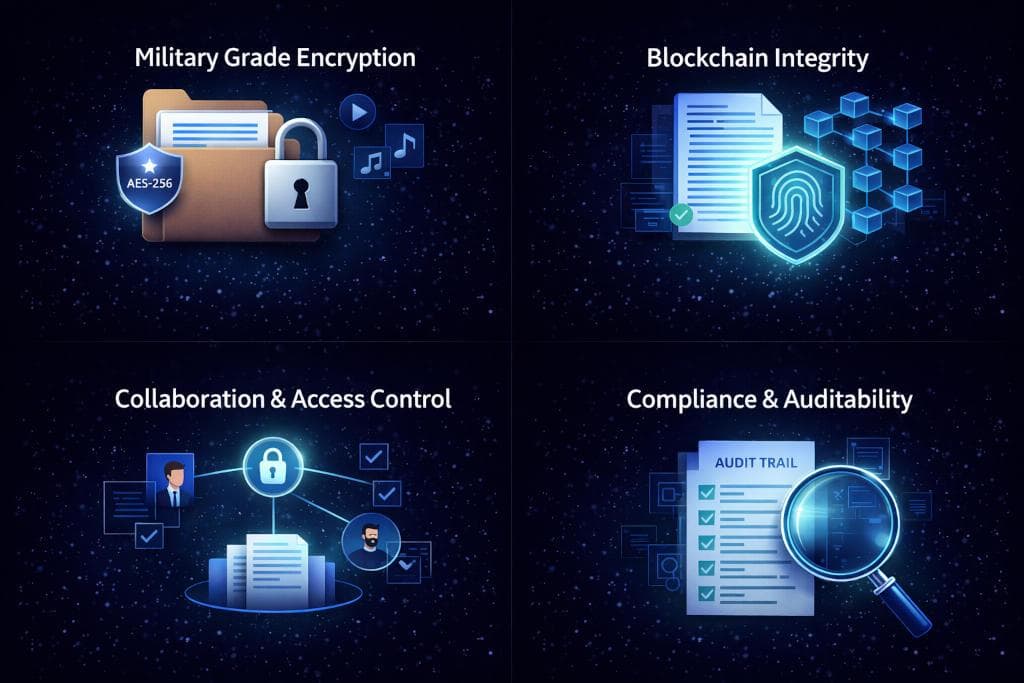
Lexkeep: Viewer, Editor, and Admin roles per matter, with controlled sharing and auditable access changes.
4) Version control and defensible history
A DMS should maintain a clear record of:
- what changed
- when it changed
- who changed it
Lexkeep: Matter-based audit trails and integrity records support defensible version history.
5) Retention, legal hold, and compliance readiness
Legal records often require retention policies and the ability to preserve documents when litigation or regulatory requests are anticipated.
Lexkeep: WORM-style retention options and audit exports support compliance and e‑discovery readiness.
Security Features Expected in a Legal DMS
Encryption at rest and in transit
A baseline requirement for cloud DMS tools is strong encryption:
- AES‑256 at rest
- TLS in transit
Lexkeep stores files encrypted at rest and protects data in transit.
Optional end‑to‑end encryption (E2EE)
For privileged or highly sensitive matters, some teams require E2EE so the platform cannot access plaintext.
Lexkeep supports optional E2EE where files are encrypted on the user’s device before upload and only authorised recipients can decrypt them.
Data Integrity: Going Beyond Traditional DMS Controls
Most DMS tools focus on access control and versioning. Lexkeep adds an integrity layer designed for disputes and investigations:
Blockchain anchoring for tamper‑evident integrity
Lexkeep computes a cryptographic fingerprint (hash) of a file and anchors that fingerprint on Ethereum. This provides tamper‑evident proof that:
- a specific version existed by or before a given time, and
- any later alteration would be detectable by hash mismatch.
Lexkeep anchors fingerprints—not the document itself—so content remains off-chain.
File Integrity Certificates
For any stored file, Lexkeep can generate a File Integrity Certificate showing the hash, anchoring reference, and timestamps—useful for clients, regulators, and evidence workflows.
What You Can Store in Lexkeep
A legal DMS should support more than PDFs. Lexkeep supports:
- contracts, pleadings, exhibits, deeds, board minutes
- images and scanned instruments
- audio interviews and call recordings
- video evidence and recordings
Who Uses a Legal DMS Like Lexkeep?
- Law firms: litigation, transactions, e‑discovery, evidence handling
- Corporate legal & compliance: investigations, regulatory responses, governance records
- IP and innovation teams: proof of creation, version history, priority evidence