
WORM Storage and Defensible Disposition
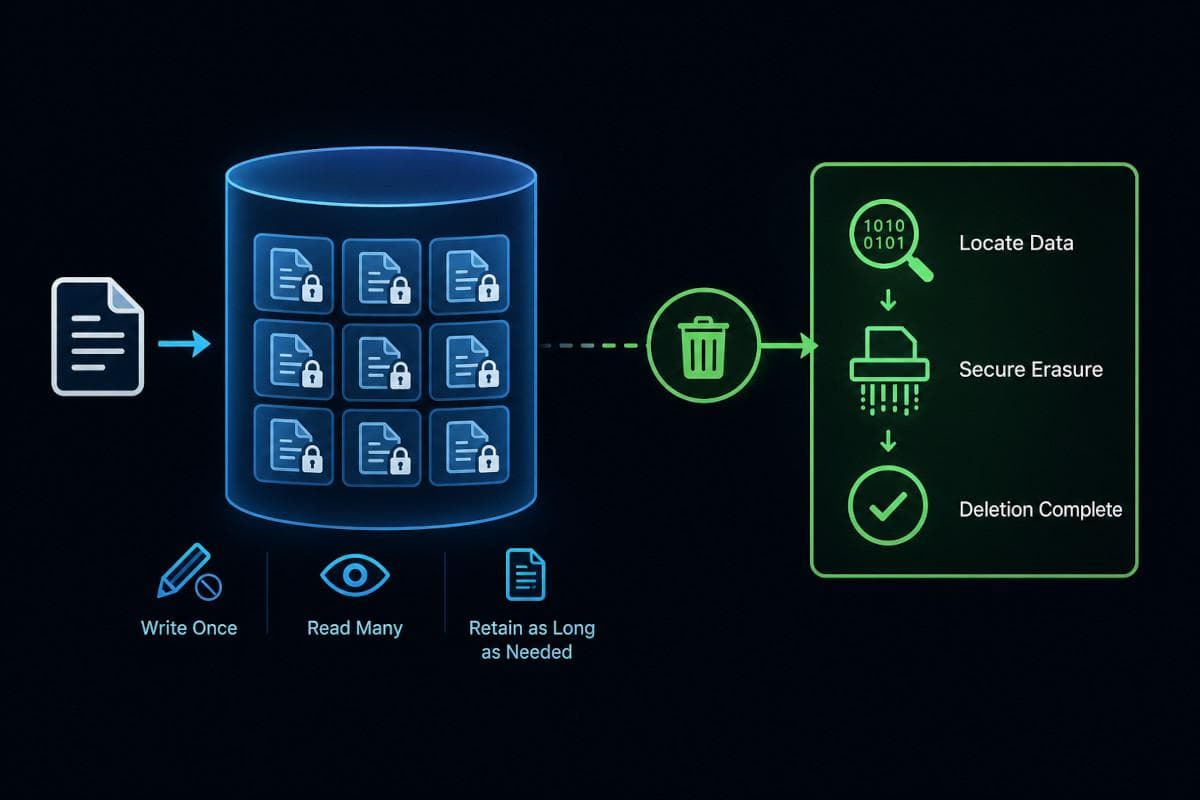
Apply retention policies to documents and records with tamper-resistant storage, legal hold controls, tamper-evident audit trails, and controlled, auditable disposition.
Protect sensitive records with WORM storage, enforce policy-based retention periods, and suspend deletion when legal, regulatory, or investigative obligations require preservation. Tamper-resistant storage and tamper-evident audit trails help preserve trust, accountability, and integrity across the records lifecycle.
Preserve record integrity with WORM storage
Critical records should remain protected from unauthorized alteration or premature deletion during their retention period. WORM storage supports immutable retention controls for documents that require stronger protection and higher-trust governance.
- Protect records during defined retention periods
- Reduce the risk of unauthorized modification or deletion
- Support immutable retention controls for sensitive records
- Strengthen confidence in high-value documents and files
Pause disposition with legal hold
Retention schedules should allow for exceptions when preservation duties arise. Legal hold controls make it possible to suspend normal deletion or disposition workflows for records relevant to litigation, investigations, disputes, audits, or regulatory review.
- Suspend disposition for relevant records
- Preserve documents subject to legal or regulatory obligations
- Reduce the risk of premature deletion
- Support defensible preservation decisions
Maintain tamper-evident audit trails
Audit records should be verifiable as well as comprehensive. Tamper-evident audit trails help demonstrate that key activity records have not been altered unnoticed, supporting stronger oversight, accountability, and trust.
- Maintain verifiable audit history
- Support stronger evidential integrity
- Improve accountability across document activity
- Strengthen trust in audit records and system actions
Apply retention policies consistently
Retention should be policy-driven, not manual. Define how long documents and records should be kept based on legal, regulatory, client, or operational requirements, and apply those rules consistently across matters, workspaces, and record types.
- Set retention periods by policy class or record type
- Standardize lifecycle governance across teams
- Reduce inconsistent manual decisions
- Support compliance-aligned recordkeeping practices
Defensible disposition
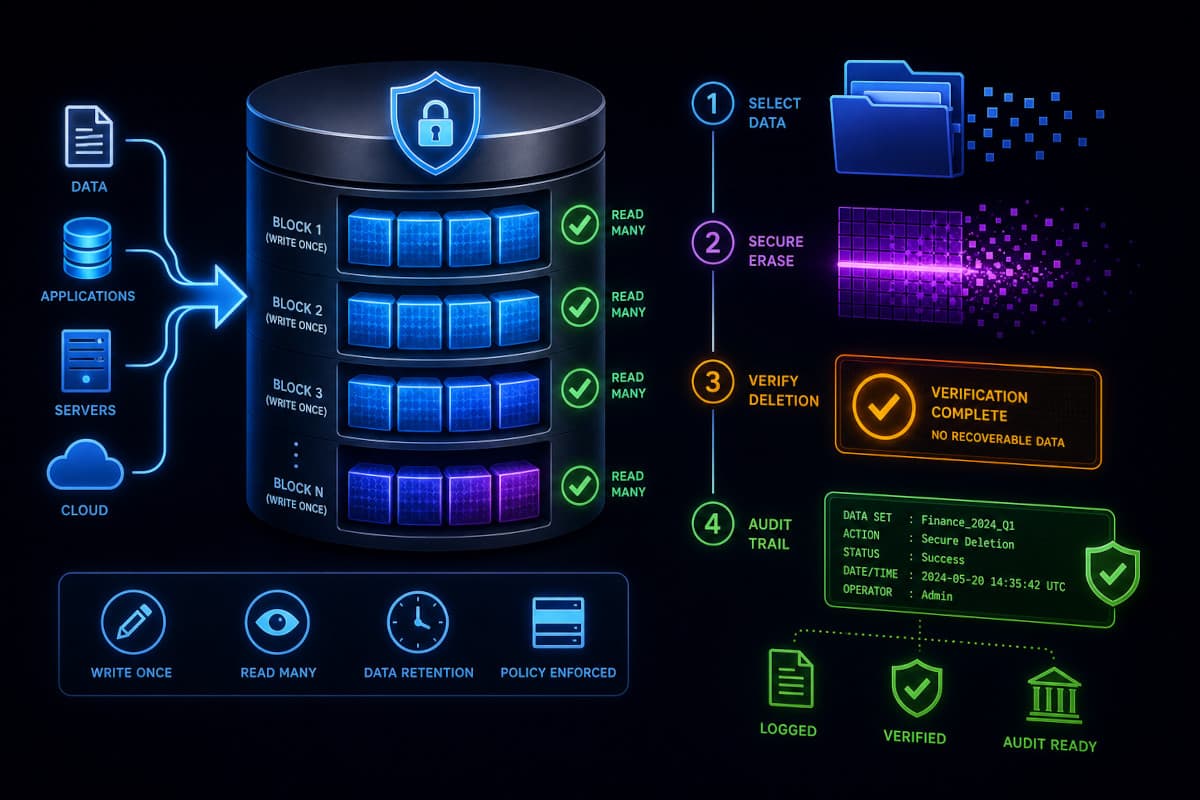
When retention obligations have been met — and no legal hold applies — records should be disposed of in a controlled and auditable way. Defensible disposition helps reduce over-retention, lower data risk, and demonstrate that disposition decisions were made according to policy.
- Dispose of records in line with retention rules
- Respect preservation exceptions such as legal hold
- Maintain auditable deletion activity
- Reduce unnecessary storage of legacy data
Verify integrity across the records lifecycle
Storage controls and audit evidence work best together. WORM storage helps protect retained records from unauthorized change, while tamper-evident audit trails and anchored file verification support confidence in what was stored, when it was handled, and how lifecycle actions were applied.
- Preserve integrity during retention
- Maintain verifiable audit evidence
- Support trusted handling of sensitive records
- Improve confidence in lifecycle governance
Why it matters
Over-retention increases exposure. Premature deletion creates risk. Weak auditability undermines trust. By combining WORM storage, legal hold controls, tamper-evident audit trails, policy-based retention, and defensible deletion, organizations can manage records more securely and credibly from creation through disposition.
Frequently Asked Questions
01What is WORM storage?
WORM storage refers to write-once-read-many controls designed to help preserve document integrity by reducing the ability to alter or prematurely delete records.
02What is defensible disposition?
Defensible disposition is the controlled, policy-based deletion or destruction of records when they are no longer required. It helps organizations reduce over-retention while showing that records were disposed of lawfully, consistently, and in accordance with retention schedules, legal holds, and internal policy.
A defensible disposition process should be:
- Authorized by retention rules and policy
- Consistent across similar records
- Paused when necessary for legal holds, investigations, or regulatory obligations
- Documented with clear audit trails
- Securely executed to ensure records are properly destroyed
In short, defensible disposition means an organization can demonstrate that deletion was routine, justified, and auditable.
03Why do retention policies matter?
Retention policies help organizations define how long documents and records should be kept based on legal, regulatory, operational, or business requirements.
Can't find what you're looking for? Browse more FAQs or contact us for further assistance.