
Matter-Centric Organisation in Secure Workspaces
Lexkeep helps legal, compliance, and business teams organise files, access, and collaboration around a specific matter, transaction, investigation, project, or internal issue. Instead of relying on scattered folders, email threads, and disconnected file-sharing tools, teams can keep sensitive work structured in secure workspaces built around the matter itself.
This matter-centric approach makes it easier to keep related records together, control who can access what, and maintain a clearer history of how files were handled over time. For teams managing sensitive documents, evidence, approvals, or internal reviews, that means better organisation, stronger access control, and more reliable collaboration.
What is matter-centric organisation?
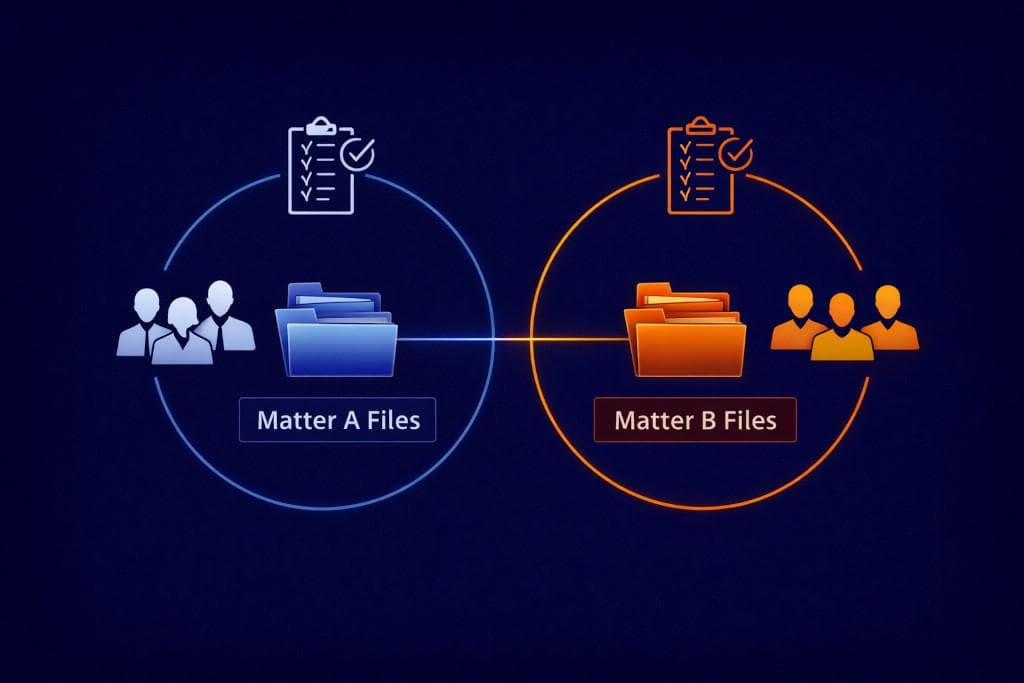
Matter-centric organisation means structuring files, access, and collaboration around a specific matter rather than storing records in generic folders or disconnected systems. A matter could be a dispute, transaction, investigation, compliance review, internal project, or any other body of work that needs its own records and participants.
Instead of separating documents from the people and activity connected to them, matter-centric organisation keeps everything tied to the same workspace. This helps teams maintain context, reduce confusion, and avoid exposing unrelated files to the wrong people.
In Lexkeep, this is done through secure workspaces called Cohorts.
Organise files and access by matter
A standard folder can store files, but it does not always provide a clear way to organise access, collaboration, and accountability around a matter. Lexkeep helps teams go beyond basic storage by creating a dedicated workspace for each matter.
With Lexkeep, teams can:
- organise files by matter, project, or issue
- keep related records and collaboration in one place
- separate sensitive work from unrelated files
- reduce confusion caused by duplicate copies and scattered storage
- maintain clearer boundaries across matters
This makes it easier to manage sensitive work in a more structured and controlled way.
Control collaboration in secure workspaces
Sensitive work often involves different participants with different levels of access. Legal teams may need to involve co-counsel, clients, experts, or investigators. Compliance and business teams may need to involve internal reviewers, managers, or external advisers.
Lexkeep secure workspaces help teams collaborate without exposing unrelated matters or over-sharing files. Access can be controlled at the workspace level so the right people can participate in the right matter.
This helps teams:
- invite internal and external participants securely
- control who can view, upload, share, or manage files
- remove access when a participant no longer needs it
- keep collaboration tied to the relevant matter only
For organisations handling sensitive records, this creates stronger collaboration boundaries and better internal control.
Why folders are not enough
Many teams already have folders for storing documents. The problem is that folders alone do not always answer the questions that become important later.
For example:
- Who had access to this matter?
- Who uploaded or shared this file?
- Was this document handled inside the right workspace?
- Can we show a clear history of activity around the matter?
When files are spread across shared drives, inboxes, and ad hoc links, it becomes harder to reconstruct what happened and who had access at each stage.
Matter-centric organisation helps reduce that risk by making the workspace the primary place where files, participants, and activity are managed together.
How Lexkeep Cohorts work
Lexkeep Cohorts are secure, matter-based workspaces that support this model of organisation. Each Cohort is tied to a specific matter, project, investigation, transaction, or internal issue, giving teams a dedicated place to manage files and collaboration.
A Cohort can be used to:
- store documents, evidence, audio, and video in one place
- manage membership within the workspace
- apply role-based permissions
- maintain a clearer record of file-related activity
- support legal holds where needed
This gives teams a more structured alternative to generic folders and disconnected collaboration tools.
More than folders: workspaces with accountability
The key difference between a folder and a matter-based workspace is accountability. A folder stores content. A secure workspace helps organise the people, permissions, and activity around that content.
With Lexkeep Cohorts, teams can manage:
- workspace membership
- role-based access
- file handling history
- collaboration across internal and external participants
- legal holds for sensitive records
This makes Cohorts especially useful where teams need stronger oversight of how files are handled over time.
Support defensible handling of sensitive records
For some matters, secure storage alone is not enough. Teams may also need to show how records were handled, whether they were altered, and when they existed in a particular form.
Lexkeep supports this with secure storage, audit trails, and integrity-focused features that help teams maintain stronger control over sensitive records.
This is especially useful for:
- evidence files
- investigation records
- executed agreements
- audio and video files
- regulatory and compliance documentation
For teams that may later need to explain or defend how records were handled, this creates a more reliable foundation.
Optional end-to-end encryption for highly sensitive work
Some matters require stronger confidentiality than standard secure storage alone. For highly sensitive work, Lexkeep supports optional end-to-end encryption so that files can be encrypted before upload and accessed only by authorised recipients.
This is especially useful for:
- privileged legal advice
- internal investigations
- whistleblowing matters
- regulatory risk matters
- highly confidential business records
Within a secure workspace, this helps teams collaborate on sensitive files while maintaining tighter confidentiality controls.
Use cases for legal, compliance, and business teams
Matter-centric organisation is useful across a wide range of workflows.
Legal teams
- organise dispute files, evidence, pleadings, and transcripts by matter
- collaborate with co-counsel, experts, and clients
- maintain clearer access boundaries across active matters
Compliance teams
- manage internal reviews, investigations, and regulatory matters
- restrict access to sensitive records
- keep documentation and activity tied to the relevant issue
Business teams
- organise transaction files, approvals, and internal project records
- collaborate securely across departments and advisers
- keep sensitive work separated from unrelated files
A more structured way to organise sensitive work
Lexkeep helps teams move beyond generic folders and disconnected collaboration tools. By organising files, access, and activity around a specific matter, secure workspaces provide a more controlled and accountable way to manage sensitive work.
For legal, compliance, and business teams that need matter-centric organisation in secure workspaces, Lexkeep offers a practical foundation for better collaboration, stronger access control, and more reliable record handling.
Frequently Asked Questions
01What is Lexkeep Cohort?
A Lexkeep Cohort is a secure, matter-based workspace used to organise files, participants, and activity around a specific matter, project, investigation, transaction, or internal issue.
02How is a Lexkeep Cohort different from a standard folder?
A standard folder stores files. A Lexkeep Cohort helps organise files, access, collaboration, and accountability around a matter, with clearer permissions and a more auditable workspace.
03Can external users be added to a Lexkeep Cohort?
Yes. If collaboration is available on your Lexkeep plan, you can use Cohorts to collaborate with selected external participants, such as co-counsel, experts, advisers, or clients, without exposing unrelated matters.
04Can legal holds be placed on Lexkeep Cohorts?
Yes. If legal hold is available on your Lexkeep plan, Cohort managers can place legal holds on Cohorts when needed.
Can't find what you're looking for? Browse more FAQs or contact us for further assistance.