
Custom AI Solutions with Pseudonymization for Sensitive Data
Deploy AI on sensitive legal, compliance, and enterprise records with stronger privacy, tighter control, and defensible handling.
Lexkeep helps organizations use AI more safely by combining secure document workflows with pseudonymization of sensitive data before analysis, review, extraction, or automation. This allows teams to benefit from AI while reducing unnecessary exposure of personal, confidential, and high-risk information.
Why this matters
Many organizations want to use AI on documents that contain:
- personal data
- client-confidential information
- investigation materials
- employee records
- privileged content
- commercially sensitive documents
- regulated compliance records
The challenge is clear: AI can improve speed and insight, but unrestricted exposure of raw documents may create legal, regulatory, confidentiality, and governance risk.
Lexkeep addresses that gap with custom AI solutions designed for higher-trust environments.
AI for Sensitive Workflows, Built with Privacy in Mind
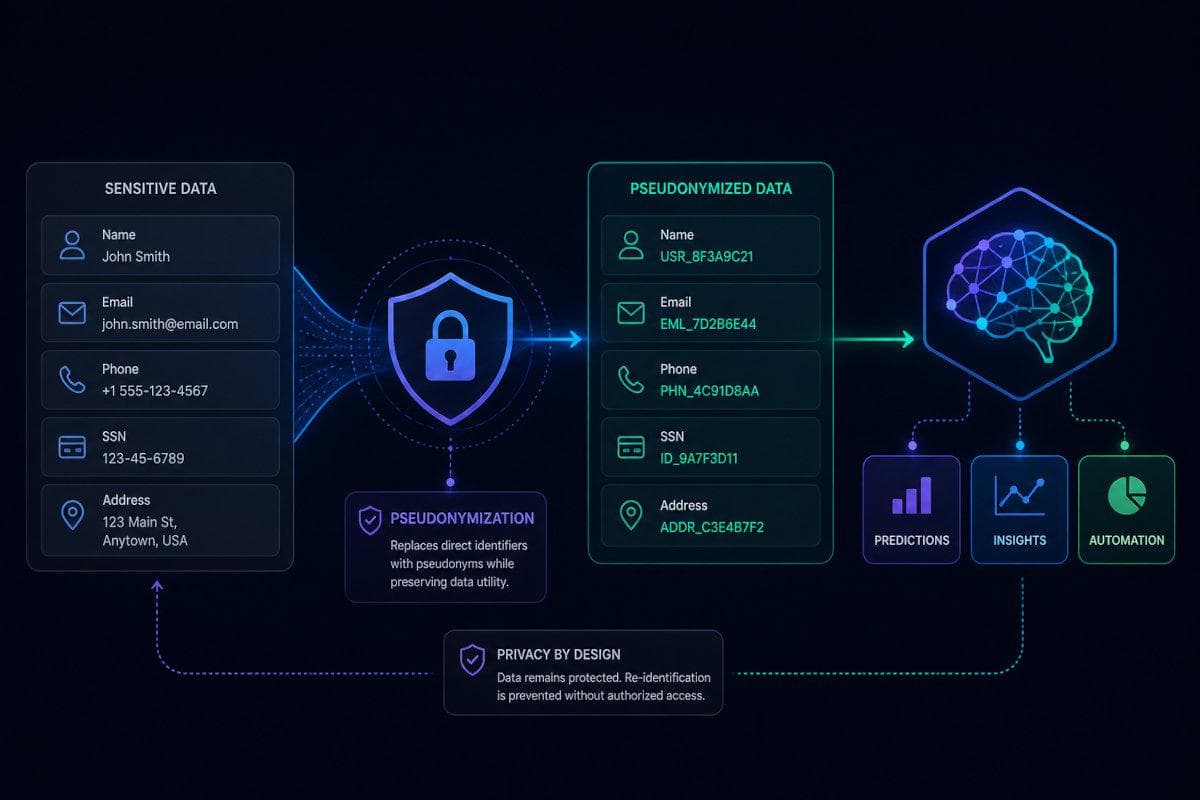
Lexkeep’s custom AI solutions can be designed to pseudonymize sensitive data before documents are processed by AI models or downstream workflows.
Depending on the use case, this can include pseudonymization of:
- names
- email addresses
- phone numbers
- national ID or account numbers
- addresses
- case-specific identifiers
- employee identifiers
- customer identifiers
- other structured or contextual personal data
This supports a safer operating model for teams that need AI capabilities without exposing more underlying data than necessary.
Potential use cases
- document summarization
- contract analysis
- compliance review
- internal investigations
- policy and governance review
- matter triage
- evidence organization
- classification and tagging
- anomaly detection
- workflow automation
- knowledge extraction from sensitive records
What Pseudonymization Helps You Achieve
Pseudonymization is not a magic solution, and it does not remove all legal or security obligations. But when implemented properly, it can materially improve privacy and governance in AI-enabled workflows.
It can help organizations:
- reduce unnecessary disclosure of personal data to AI systems
- limit exposure of sensitive identifiers during review and analysis
- support internal privacy-by-design practices
- create more controlled AI testing and deployment environments
- separate identity data from analytical workflows where appropriate
- improve defensibility in sensitive document processing
For many legal and compliance teams, the question is not simply whether AI is useful. It is whether AI can be used in a controlled and responsible way.
Designed for Legal, Compliance, and Enterprise Contexts
Lexkeep’s approach is suited to organizations handling records that may later be scrutinized in:
- disputes
- audits
- investigations
- regulatory response
- internal reviews
- governance processes
- employment matters
- whistleblowing workflows
- high-value contract operations
In these contexts, privacy, traceability, and document integrity matter alongside automation.
That is why Lexkeep’s broader environment can be combined with:
- secure document management
- granular access controls
- audit trails
- version control
- matter-centric organization
- WORM-style preservation
- secure sharing
- blockchain-backed proof of integrity
This helps ensure that AI is not deployed as an isolated tool, but as part of a more governed document workflow.
Custom AI Solutions, Not One-Size-Fits-All Automation
Sensitive AI workflows vary significantly between organizations. A law firm, compliance team, insurer, regulator-facing business, and corporate investigations unit may all have different requirements.
Lexkeep can support custom solution design based on factors such as:
- types of sensitive data involved
- risk tolerance and governance requirements
- internal review and approval processes
- data segregation needs
- retention requirements
- access models
- evidential or auditability concerns
- integration with existing matter or document workflows
This allows organizations to explore AI use cases without treating all sensitive records the same way.
A More Governed Approach to AI on Sensitive Documents
For high-trust environments, the goal is not merely to “add AI.” It is to apply AI in a way that better respects confidentiality, privacy, operational control, and evidential reliability.
A stronger model may include:
- secure document intake
- controlled access to source materials
- pseudonymization of sensitive data where appropriate
- AI processing for approved tasks
- human review and validation
- auditable workflow history
- governed retention and handling of outputs
This approach supports practical AI adoption while reducing avoidable risk.
Representative Use Cases
Legal and disputes
- document review support
- chronology building
- issue spotting
- bundle organization
- redaction and pseudonymization workflows
Compliance and investigations
- incident review
- whistleblowing file handling
- policy gap analysis
- case triage
- evidence classification
HR and employment
- sensitive case review
- grievance materials
- disciplinary records
- internal inquiry support
Corporate and enterprise
- contract intelligence
- records classification
- sensitive archive analysis
- approval workflow support