

How to Keep Track of Legal Cases
Published on:
Keeping track of legal cases is one of the biggest challenges for law firms, in-house legal teams, and solo practitioners. Some firms still depend on a physical court diary to record court dates and follow-ups, but paper-based tracking can be difficult to update, search, and share across a team. As caseloads grow, important details can easily slip through the cracks. A strong digital case tracking system helps you stay organized, reduce risk, improve client service, and keep your team aligned. Whether you manage a few active matters or hundreds, the right process—and the right case management software—can make all the difference.
Why case tracking matters
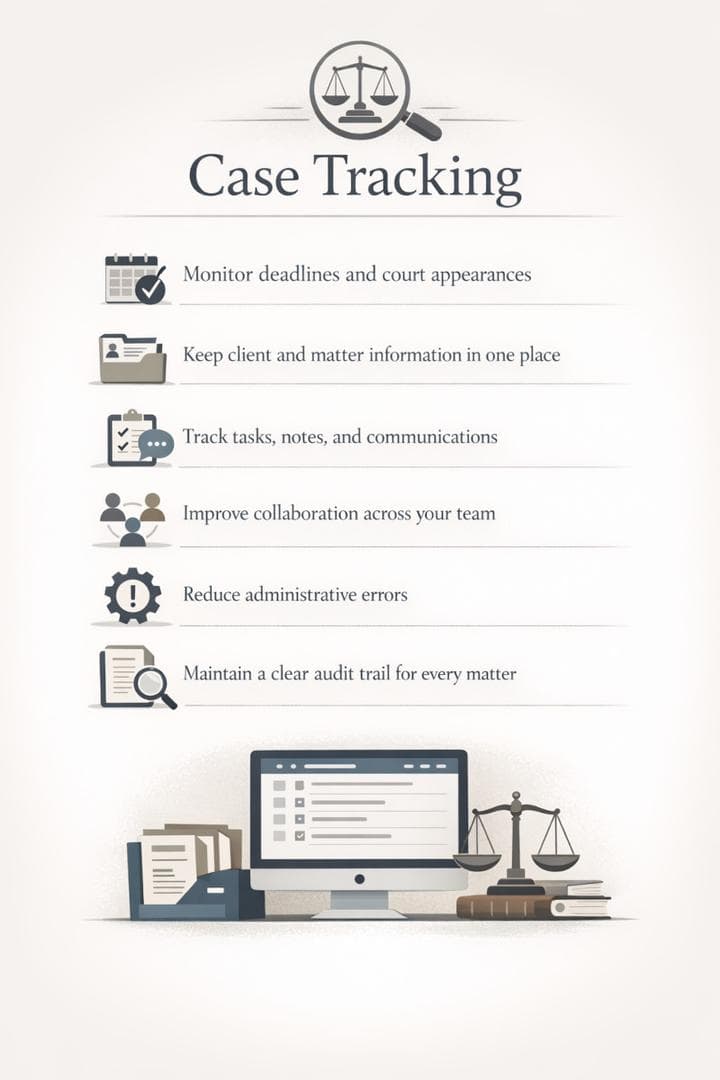
Legal work moves quickly. Missing a filing deadline, forgetting a hearing date, or losing track of a document can have serious consequences. Effective case tracking helps you:
- Monitor deadlines and court appearances
- Keep client and matter information in one place
- Track tasks, notes, and communications
- Improve collaboration across your team
- Reduce administrative errors
- Maintain a clear audit trail for every matter
For firms that want to scale, case tracking is not just helpful—it’s essential.
Common challenges in tracking legal cases
Many legal teams still rely on spreadsheets, email threads, paper files, or a mix of disconnected tools. That often leads to:
- Duplicate or missing information
- Missed deadlines
- Difficulty finding the latest document version
- Poor visibility into case progress
- Time wasted searching for updates
- Inconsistent communication with clients
As caseloads grow, manual tracking becomes harder to manage and more prone to error.
Best practices for keeping track of legal cases
1. Centralize all case information
Every matter should have a single source of truth. Store key details such as:
- Client name
- Case number
- Court and jurisdiction
- Opposing counsel
- Important dates
- Documents and evidence
- Notes and correspondence
- Assigned team members
When everything is in one place, your team can work faster and with greater confidence.
2. Use a clear deadline system
Deadlines are critical in legal practice. Build a system that tracks:
- Filing deadlines
- Hearing dates
- Discovery timelines
- Client follow-ups
- Internal review dates
A good case management platform should allow you to set reminders and automate alerts so nothing is overlooked.
3. Track tasks and responsibilities
A case is rarely managed by one person alone. Assign tasks clearly so everyone knows what they are responsible for. This helps with:
- Accountability
- Workflow management
- Team coordination
- Progress tracking
When tasks are visible, it becomes easier to identify bottlenecks and keep matters moving.
4. Keep communication organized
Client emails, internal discussions, and court-related correspondence should be easy to find. Organizing communication by matter helps your team:
- Respond faster
- Avoid confusion
- Maintain accurate records
- Support continuity if team members change
5. Maintain document control
Legal cases generate a lot of documents. Use a system that helps you:
- Upload and store files securely
- Track document versions
- Link documents to specific matters
- Retrieve files quickly when needed
This reduces the risk of using outdated or incorrect documents.
6. Review case progress regularly
Set aside time to review active matters. Regular check-ins help you:
- Spot delays early
- Update deadlines and tasks
- Reassign work if needed
- Keep clients informed
- Ensure nothing is falling behind
A weekly or biweekly review can significantly improve case visibility.
How case management software helps
Modern case management software simplifies the process of tracking legal cases. Instead of juggling multiple tools, your team can manage matters from one platform.
With Lexkeep’s Case Management Software, legal teams can:
- Organize case files in one secure place
- Track deadlines and reminders
- Assign and monitor tasks
- Manage client and matter details
- Improve collaboration across the team
- Access case information quickly when needed
This kind of system helps reduce manual work and gives your team more time to focus on legal strategy and client service.
What to look for in a case tracking solution
When choosing software to help track legal cases, look for features such as:
- Matter-based organization
- Deadline and reminder automation
- Secure document storage
- Task assignment and workflow tracking
- Searchable case history
- Team collaboration tools
- Reporting and visibility
- Easy access from anywhere
The best solution should fit your workflow, not force you to change it.
Conclusion
Keeping track of legal cases doesn’t have to be stressful. With the right structure and the right software, you can stay on top of deadlines, improve team coordination, and deliver better service to clients.
Lexkeep’s Case Management Software is designed to help legal professionals manage cases more efficiently, reduce administrative burden, and keep every matter under control.