
Proof and Record Keeping for Takedown Notices
Published on:
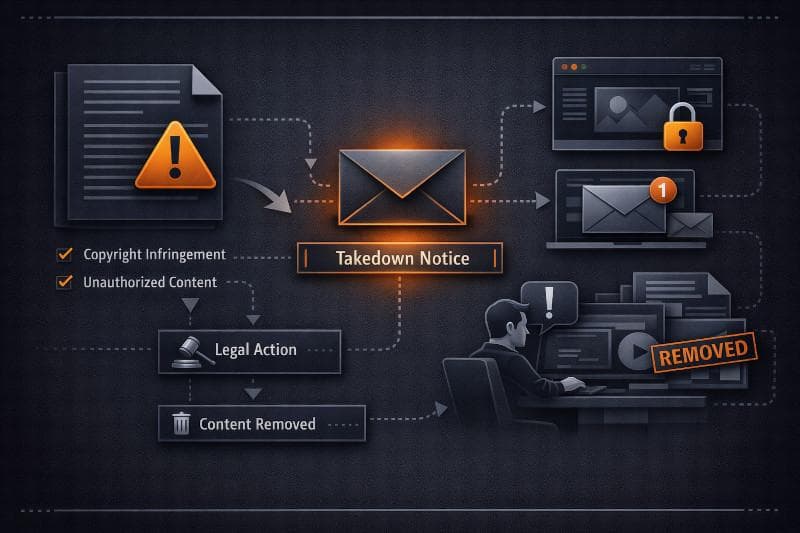
A takedown notice is often urgent, sensitive, and evidence-driven. For legal and compliance teams, the challenge is not only preparing and sending the notice, but also keeping proof of what was reported, what evidence existed at the time, when the notice was sent, and how the matter was handled afterward.
Without proper proof and record keeping, it becomes harder to show that the offending content existed, that a complaint was made, that supporting documents were preserved, and that follow-up steps were taken. If the matter later escalates into a dispute, platform challenge, regulatory review, or legal proceeding, weak records can undermine an otherwise strong case.
This is why proof and record keeping matter in takedown workflows. Legal teams need a reliable way to preserve evidence, maintain timestamps, track submissions, and keep a defensible history of the matter from initial complaint to final resolution.
Why proof matters in takedown matters
A takedown notice is not just a request to remove content. It is part of a broader legal and compliance process that may later need to be defended or escalated.
In many cases, legal teams need to keep proof of:
- the offending content as it appeared at the time
- the date the issue was identified
- screenshots and supporting evidence
- the draft and final version of the notice
- when the notice was approved
- when it was sent
- who received it
- whether receipt was acknowledged
- what response was received
- whether the content was removed, disputed, or ignored
- what follow-up actions were taken
This proof can become critical in matters involving copyright infringement, trademark misuse, defamation, privacy breaches, impersonation, unauthorized publication, leaked confidential information, or harmful online content.
Common gaps in takedown notice documentation
Many takedown matters are still handled across email threads, shared folders, chat messages, and local drives. That often creates gaps in proof and documentation.
Missing proof of content
If screenshots, links, or archived references are not captured early, the offending content may later be changed or removed before the team can prove what was published.
Weak proof of submission
If the notice is sent through email or a platform form without proper tracking, it may be difficult to prove when it was submitted or what exactly was sent.
Incomplete proof of receipt
A team may know a notice was sent, but not have a clear record showing whether it was received, acknowledged, or acted upon.
Scattered evidence
Supporting documents may be stored in different places, making them harder to retrieve if the matter needs to be escalated.
Poor version control
Multiple drafts of a takedown notice may exist without a clear record of which version was approved and sent.
Unclear follow-up history
If reminders, responses, and escalation steps are not recorded properly, the matter history becomes harder to reconstruct later.
These gaps can weaken internal control and make it harder to build a defensible record.
What legal teams should keep on file
Strong takedown notice record keeping goes beyond the notice itself. Legal and compliance teams should be able to preserve proof of the full matter history, including:
- the original complaint or internal report
- screenshots of the offending content
- URLs and page references
- archived copies where available
- supporting documents and attachments
- draft and final versions of the notice
- internal approvals and review notes
- proof of submission
- proof of receipt or acknowledgment
- response correspondence
- follow-up actions
- escalation notes and related records
When these records are organized in one place, legal teams can respond faster and maintain better control over the process.
Why records matter when disputes escalate
A takedown notice does not always end with content removal. In some cases, the platform may reject the complaint, the publisher may dispute the claim, or the content may remain online despite notice.
When that happens, legal teams need more than a copy of the original notice. They need proof and a reliable record of the entire workflow. This includes evidence of the content, proof of submission, proof of receipt, and a clear audit trail of what happened next.
Without this, escalation becomes harder. Teams may have to reconstruct the timeline manually, search for missing files, or rely on incomplete email records under time pressure.
How Lexkeep helps streamline the process
Lexkeep helps legal and compliance teams manage takedown matters with stronger structure, better visibility, and more reliable records. Instead of relying on disconnected tools, teams can centralize documents, evidence, communications, and follow-up actions within a matter-based workflow.
This makes it easier to preserve proof, maintain document history, and retrieve the full record of a takedown notice when needed.
Matter management for takedown workflows
Each takedown notice can be managed as a matter in Lexkeep. This gives legal teams one place to organize the complaint, evidence, notice drafts, final submissions, and follow-up actions.
Matter management helps keep related records together and reduces the confusion that comes from storing information across multiple systems. It also makes it easier to track the status of the matter and confirm what has already been done.
Document management for evidence and notices
Takedown matters often involve screenshots, PDFs, draft notices, final notices, response letters, internal memos, and supporting files. Lexkeep’s document management helps teams keep these records organized and accessible.
This improves version control and makes it easier to retrieve the right document at the right time. Instead of searching through inboxes and folders, legal teams can work from a more structured record of proof and evidence.
Blockchain-backed records and audit trails
One of the most important parts of takedown notice record keeping is preserving the integrity and timing of key records. Lexkeep’s blockchain record keeping helps strengthen proof by supporting a more reliable record of documents and matter activity.
This can help legal and compliance teams maintain stronger proof of:
- submitted notices
- supporting evidence
- timestamps
- document history
- key matter actions
Where a dispute later arises over what was created, stored, or submitted at a particular time, blockchain-backed record keeping can support a more defensible audit trail.
Secure collaboration across legal teams
Takedown matters can involve sensitive legal, reputational, and compliance issues. Lexkeep supports secure legal file sharing so teams can collaborate on notices, evidence, and responses without relying on fragmented or insecure channels.
This is useful when working across internal legal teams, compliance teams, external counsel, investigators, or rights holders. Secure collaboration helps maintain control over records while allowing the right people to access the matter.
Where strong proof matters most
Strong proof and record keeping are especially valuable in takedown matters involving:
- copyright infringement
- trademark misuse
- defamatory online content
- privacy and data protection complaints
- impersonation or fake profiles
- leaked confidential documents
- harmful or unlawful digital content
In these situations, preserving proof can be just as important as sending the notice itself.
Building a more defensible workflow
When proof and records are incomplete or scattered, legal teams lose time searching for files, confirming versions, and reconstructing timelines. That creates unnecessary risk, especially where the matter may later require escalation or legal enforcement.
A more defensible workflow helps teams move faster while maintaining stronger records. It improves internal coordination, supports better decision-making, and makes it easier to show what happened at each stage of the matter.
Conclusion
Proof and record keeping are central to an effective takedown notice process. Legal and compliance teams need more than a template notice. They need a reliable way to preserve evidence, keep proof of submission and receipt, maintain timestamps, and organize follow-up actions.
Lexkeep helps streamline this process through matter management, document management, secure legal file sharing, and blockchain record keeping. For teams handling sensitive content complaints, that means a more organized, efficient, and defensible way to manage takedown matters.