
Tamper-Evident Audit Trails for Documents and Records
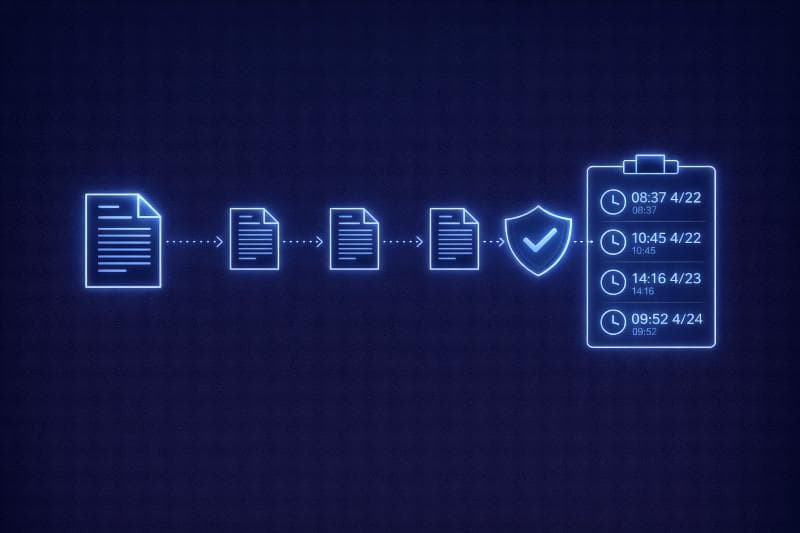
Lexkeep helps organisations maintain clear, tamper-evident audit trails across documents, records, and matter activity in one secure system, using Merkle-tree-based integrity checks to help verify that records have not been altered. Teams can track key actions such as uploads, access, sharing, updates, and other file-related events while maintaining a more reliable history of who did what and when.
To strengthen audit trail integrity, Lexkeep uses hash-linked audit logs anchored on Ethereum. This helps make unauthorised changes to audit history evident and supports a more independently verifiable record of activity over time.
For legal, compliance, and business teams, this supports stronger oversight, accountability, and defensible record-keeping across sensitive workflows.
Why tamper-evident audit trails matter
Sensitive documents and records often move through multiple hands. Files may be uploaded, reviewed, shared, updated, or accessed by different users across teams and matters. Without a clear and trustworthy activity history, it becomes harder to confirm how a record was handled, who had access, and what changed over time.
A tamper-evident audit trail helps solve this by making document and record activity easier to trace while strengthening confidence in the integrity of the audit history itself. This is especially important for organisations that need stronger oversight of confidential files, regulated records, or sensitive internal workflows.
Track document and record activity in one place
Lexkeep helps teams track important file-related activity in one secure platform. This can include actions such as:
- file uploads
- access events
- sharing activity
- updates and changes
- other document-related actions
By keeping this activity visible and easier to review, Lexkeep helps teams maintain better oversight across documents, records, and matter-based work.
Ethereum-anchored audit logs for stronger integrity
Lexkeep uses hash-linked audit logs anchored on Ethereum to help make audit trail tampering evident. Audit entries are linked in sequence, and key log states are anchored to a public blockchain to support a stronger, independently verifiable history of activity over time.
This helps organisations maintain greater confidence in who did what and when, especially in workflows where audit history may later matter during investigations, disputes, regulatory reviews, or internal oversight.
Why blockchain anchoring matters
Traditional audit logs are useful, but they are often stored only within the same system that generated them. Lexkeep adds an extra integrity layer by anchoring audit log states on Ethereum, helping teams maintain a more trustworthy record of activity that can be checked against a public blockchain record.
For organisations handling sensitive legal, compliance, governance, or investigation-related records, this can provide stronger assurance that audit history has not been silently altered.
Better visibility for legal and compliance workflows
Audit trails are especially useful in legal and compliance environments, where teams may need to show how records were handled, reviewed, accessed, or shared over time.
This can support:
- internal reviews
- investigations
- regulatory responses
- e-discovery preparation
- disputes over document handling
- stronger accountability across sensitive workflows
For teams managing confidential or high-value records, a clear and tamper-evident audit trail can make it easier to understand what happened and respond with confidence.
Audit trails in one secure system
When activity records are scattered across email threads, shared drives, and disconnected tools, it becomes harder to maintain a reliable history of document handling. Lexkeep helps solve this by keeping audit trails within the same secure platform used to manage documents, records, and matter activity.
This gives teams a more structured way to review file-related events without relying on fragmented systems or incomplete records.
Built for controlled document handling
Lexkeep supports tamper-evident audit trails as part of a broader approach to secure document and record management. Combined with controlled access, secure storage, and matter-based organisation, audit trails help teams maintain stronger oversight of sensitive work.
This is useful for organisations handling:
- agreements and contract records
- legal documents and case files
- compliance records
- investigation materials
- board and governance documents
- audio and video files
- other sensitive business records
A clearer and more defensible record of activity
Audit trails help teams move beyond guesswork. Instead of relying on memory or scattered system logs, organisations can maintain a clearer and more defensible record of who interacted with a file, when activity occurred, and how records were handled over time.
With Ethereum-anchored, hash-linked audit logs, Lexkeep helps strengthen trust in that activity history and supports better governance, accountability, and record-keeping across legal, compliance, and business workflows.
Why teams use Lexkeep for audit trails
With Lexkeep, teams can:
- maintain tamper-evident audit trails for documents and records
- track file-related activity in one secure system
- improve visibility into access, sharing, and updates
- strengthen confidence in audit trail integrity
- support stronger internal control and accountability
- maintain better oversight across sensitive workflows
Conclusion
Lexkeep helps organisations maintain tamper-evident audit trails for documents and records so teams can work with better visibility, stronger control, and more defensible record-keeping. With hash-linked audit logs anchored on Ethereum, Lexkeep adds a stronger integrity layer to document and record activity history across sensitive workflows.