

How to Keep Business Communication Records Secure
Published on:
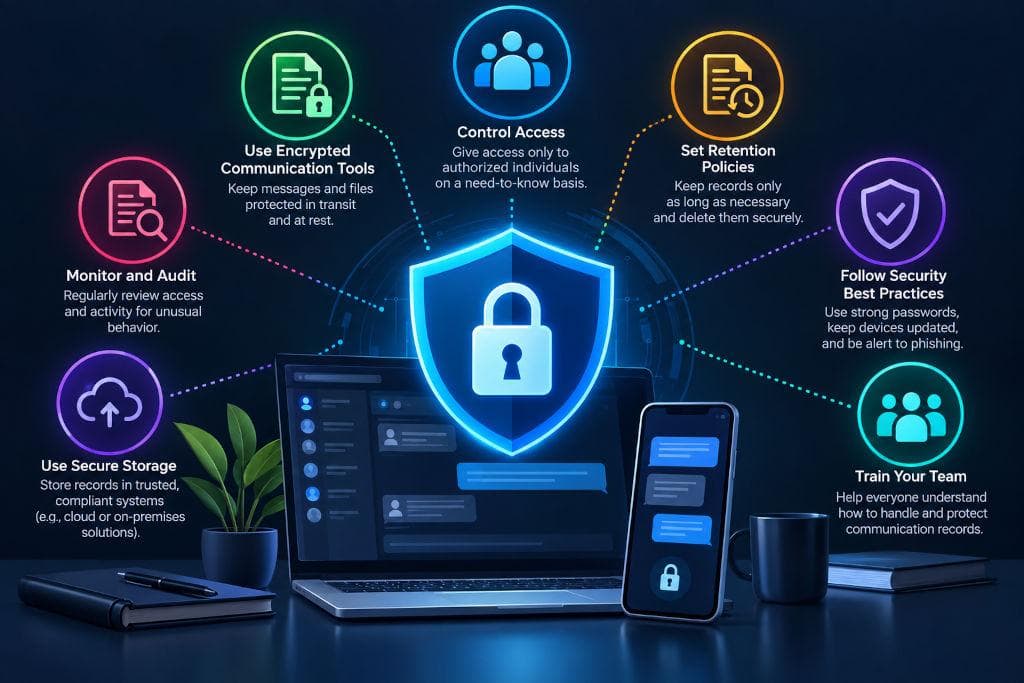
Business communication records can contain approvals, decisions, contractual commitments, customer information, employee matters, and operational instructions. Keeping these records secure helps protect sensitive information while ensuring important communications remain accessible, complete, and trustworthy.
A secure approach to business communication records combines centralised storage, access controls, retention rules, audit trails, and tamper-evident file integrity.
What Are Business Communication Records?
Business communication records are communications that document decisions, transactions, obligations, policies, customer interactions, or other significant business activity.
They may include:
- Emails and email attachments
- Letters and formal correspondence
- Meeting minutes and decisions
- Customer and supplier communications
- Internal approvals and management instructions
- HR and employee-relations correspondence
- Compliance, audit, incident, or investigation communications
- Project updates, reports, and messages
Not every message needs to be retained as a formal record. However, organisations should have clear rules for identifying communications that must be captured, stored, and managed securely.
Store Communication Records in a Central System
Important business communications should not exist only in personal inboxes, chat histories, local folders, or employee devices. These locations can make records difficult to find, protect, retain, and transfer when an employee changes roles or leaves the organisation.
A central document and records management system gives authorised teams a consistent place to store and retrieve communications. It can also support access controls, classification, retention, search, and record-integrity processes.
When saving a communication record, capture useful context such as:
- Date and time
- Sender and recipients
- Related customer, project, matter, or transaction
- Subject or description
- Attachments and supporting files
- Record category
- Applicable retention period
This metadata makes communication records easier to locate and manage over time.
Control Who Can Access Business Records
Sensitive communications should only be available to people with a legitimate business need to access them. Role-based permissions can help organisations control who can view, upload, edit, share, download, or delete records.
Good access-control practices include:
- Using individual user accounts rather than shared credentials
- Applying permissions based on job role and responsibility
- Restricting access to sensitive employee, legal, financial, or customer records
- Reviewing user access periodically
- Removing or changing access promptly when staff change roles or leave
- Limiting unnecessary downloads and external sharing
Access controls help protect confidentiality without preventing authorised teams from doing their work.
Protect Direct and Team Communications With End-to-End Encryption
Sensitive business discussions should be protected from unauthorised access from the moment they are sent. Lexkeep uses end-to-end encryption for direct and team communications, helping ensure that conversation content is accessible only to authorised participants.
Preserve the Full Record and Its Context
A business communication may lose meaning if it is separated from its attachments, recipients, date, or related correspondence. Preserve the record in a way that retains its context.
For important emails, this may mean retaining the message, sender, recipients, date, subject, attachments, and relevant email thread. For messages or meeting records, preserve sufficient information to show who participated, when the communication occurred, and what business activity it concerned.
Where records are updated, maintain version history rather than simply replacing earlier versions. A version history can help show how a file changed and identify the current approved version.
Protect File Integrity With Tamper-Evident Controls
Secure records must be protected from unauthorised access, but they must also remain trustworthy. Organisations should be able to identify whether an important communication or file has been altered, replaced, or corrupted.
Audit trails and tamper-evident controls can help establish confidence in record integrity. They create visibility around important record activity, such as when a file was uploaded, accessed, shared, changed, or verified.
Tamper-evident integrity is especially valuable for communications that may later be reviewed during an audit, dispute, investigation, compliance review, or internal decision-making process.
Lexkeep helps organisations manage documents and records while maintaining tamper-evident integrity for important files.
Apply Communication Record Retention Rules
Keeping every communication indefinitely can increase storage costs, create clutter, and expand exposure to unnecessary information. On the other hand, deleting a record too early may create operational, legal, or compliance problems.
A retention schedule helps organisations retain communication records for an appropriate period and dispose of them in a controlled manner when they are no longer required.
Your retention process should identify:
- The category of communication record
- The required retention period
- The person or team responsible for review
- The disposal process at the end of the retention period
- Circumstances that require a retention pause, such as an audit, investigation, dispute, or legal hold
Retention decisions should follow a documented policy rather than individual employee judgement.
Maintain an Audit Trail
An audit trail helps organisations understand what has happened to a business communication record throughout its lifecycle.
It should help answer questions such as:
- Who uploaded or captured the record?
- When was it created or stored?
- Who accessed, downloaded, shared, or edited it?
- Has the file changed since it was stored?
- Which version is current?
- Was the record retained or disposed of according to policy?
Clear activity history improves accountability and makes records easier to review when questions arise.
Train Employees on Secure Records Management
Technology works best when employees understand the organisation’s records-management process. Staff should know which communications are business records, where they should be stored, how they should be classified, and how to handle sensitive information.
Review the process periodically, especially when introducing new messaging platforms, changing business operations, or handling new categories of information.
Secure Business Communication Records With Lexkeep
Keeping business communication records secure requires more than saving files in a folder. Organisations need centralised storage, appropriate access controls, clear retention rules, reliable audit trails, and confidence in file integrity.
Lexkeep helps teams organise business communications, preserve critical records, control access, manage retention, and verify tamper-evident file integrity.