
How to Protect Your Content as a Blogger or Influencer
Published on:
Creating original content takes time, effort, and creativity. Whether you publish blog posts, videos, podcasts, graphics, photos, or social media content, your work is part of your brand and your business. But for many bloggers and influencers, content theft, unauthorized copying or republication, impersonation, and uncredited reuse are common problems.
Protecting your content online is not just about reacting after something goes wrong. It is also about putting the right proof and record-keeping steps in place before a dispute happens. If someone copies your work, republishes your content without permission, or challenges your ownership, the ability to show when your content was created, what the original version looked like, and how it has been handled can make a real difference.
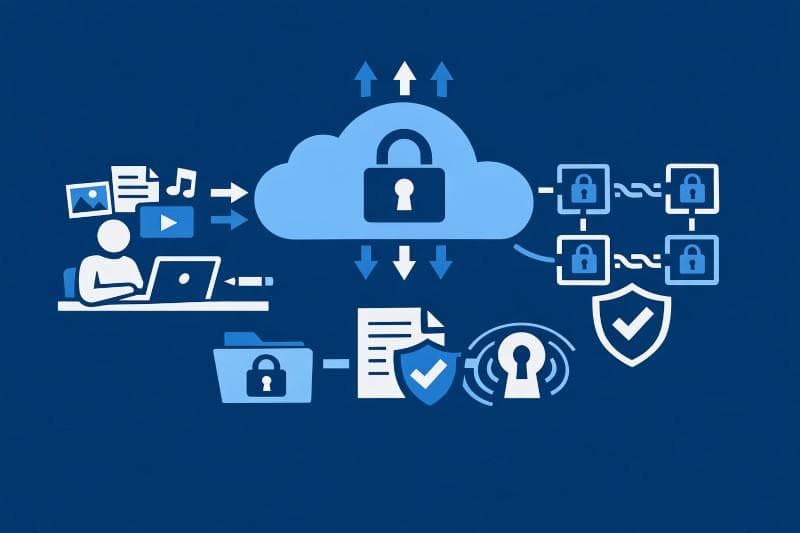
This is where a stronger content protection workflow matters. With secure storage, timestamps, and blockchain-backed record keeping, Lexkeep helps creators maintain better proof of ownership and a more reliable record of original content.
Why content protection matters for bloggers and influencers
For creators, content is not just expression. It can also be intellectual property, commercial value, audience trust, and brand identity. A copied article, re-uploaded video, stolen image, or fake account using your content can affect your reach, reputation, and income.
Common risks include:
- unauthorized copying or republication of blog or social media content
- removal of your name or credit from original work
- copying of captions, graphics, or videos
- impersonation through fake profiles or pages
- disputes over who created content first
- difficulty proving ownership when content is challenged
The more visible your content becomes, the more important it is to protect it properly.
What it means to protect your content online
Protecting your content online does not always mean preventing copying completely. In many cases, it means being able to prove that the content is yours, show when it was created, preserve the original version, and respond quickly if it is misused.
A practical content protection strategy should help you:
- keep original files and drafts safely
- preserve proof of creation and publication dates
- maintain records of edits and versions
- store screenshots and links if misuse occurs
- keep proof ready for takedown notices or disputes
This is especially important for creators who publish frequently across multiple platforms.
How to prove ownership of your content
One of the biggest challenges in content disputes is proof. If someone steals your content, copies it, republishes it without permission, or claims it as their own, you may need to show more than just a live link. You may need proof of the original file, the date it existed, and the history of how it was stored or published.
Useful proof can include:
- original drafts
- source files
- raw images or video files
- timestamps
- publication records
- screenshots of the content as posted
- records showing when the file was created or stored
- evidence of authorship or account ownership
The stronger your records, the easier it becomes to support a complaint, send a take down notice, or defend your ownership if challenged.
Keep original files and drafts
One of the simplest ways to protect your content is to keep the original version of what you create. This includes early drafts, source files, edited versions, and final published copies.
For example, if you are a blogger, keep:
- draft versions of articles
- original research notes
- images used in the post
- final published copy
If you are an influencer or creator, keep:
- raw video footage
- original image files
- edited exports
- captions and campaign drafts
- final posted versions
These records can help show that your content existed in your possession before it was copied, republished, or disputed.
Use timestamps and reliable record keeping
Timestamps are one of the most useful tools in proving that content existed at a particular time. If you can show that a file was created, stored, or preserved before someone else copied, republished, or claimed it, that can strengthen your position.
This is where record keeping becomes important. Instead of relying only on social media timestamps or platform history, creators should keep their own records of important content assets.
A stronger record-keeping process helps you preserve:
- proof of creation
- proof of storage
- proof of publication
- proof of the original version
- proof of later edits or updates
Lexkeep supports this with secure document and media storage, blockchain-backed timestamping, and tamper-evident record keeping that can help creators maintain a more defensible history of their content.
Store screenshots and evidence of misuse
If someone steals, copies, or republishes your content without permission, do not rely on the assumption that it will stay online long enough for you to act later. Capture evidence as early as possible.
This may include:
- screenshots of the copied content
- the URL or account name
- the date and time you found it
- any comments, captions, or branding attached to it
- side-by-side comparison with your original content
If the misuse later disappears, these records may still help support a complaint or take down request.
Keep a record of where and when you published
Creators often publish across blogs, Instagram, TikTok, YouTube, X, LinkedIn, newsletters, and other channels. Over time, it can become difficult to track where a piece of content first appeared and in what form.
Keeping a record of publication helps you show:
- where the content first appeared
- when it was published
- what version was posted
- whether it was later edited or reused
This is especially useful when content is adapted across platforms and someone later disputes the original source.
What to do when someone steals your content
If someone copies your content, republishes it without permission, re-uploads it as their own, or uses it in a misleading way, act quickly but methodically.
A practical response may include:
- Preserve proof first
Save screenshots, links, and copies of the offending content. - Gather your original records
Keep the original file, draft, timestamp, and publication history ready. - Check the platform’s reporting process
Many platforms have complaint or take down procedures for copyright, impersonation, or misuse. - Send a take down notice if needed
A formal notice may be necessary if the content is not removed voluntarily. - Keep records of all follow-up
Save emails, acknowledgments, responses, and any action taken.
The stronger your proof and documentation, the easier it is to support your complaint.
Why secure storage matters for creators
Content protection is not only about proving ownership against others. It is also about protecting your own files from loss, confusion, or poor organisation.
If your drafts, raw files, and evidence are scattered across devices, inboxes, and cloud folders, it becomes harder to retrieve what you need when a dispute arises.
Secure storage helps creators:
- keep original files organised
- reduce the risk of losing important records
- maintain better control over sensitive content
- retrieve evidence quickly when needed
- preserve a clearer history of content creation and use
For creators working with teams, editors, managers, or legal advisers, secure file sharing and controlled access can also help keep content records more organised.
How Lexkeep helps protect original content
Lexkeep helps bloggers, influencers, and other creators maintain stronger proof and record keeping for original content. It combines secure storage, document and media management, blockchain-backed timestamping, and tamper-evident record keeping in one system.
This can help creators:
- store original drafts, images, videos, and final content securely
- preserve timestamps for important files
- maintain proof of existence and document integrity
- keep records of screenshots and evidence if misuse occurs
- organise content-related records in one place
- support take down notice workflows with better documentation
For creators who want a more reliable way to protect blog posts, media files, and digital content, this creates a stronger foundation than relying only on platform history or scattered folders.
Build a better content protection workflow
You may not be able to stop every instance of copying or misuse, but you can make it much easier to prove ownership and respond effectively.
A stronger workflow includes:
- keeping original drafts and source files
- preserving timestamps
- storing evidence of misuse
- maintaining records of publication and follow-up
- using secure systems to organise and protect content assets
For bloggers and influencers, that kind of preparation can make a major difference when content is challenged, copied, or taken without permission.
Conclusion
If you create content professionally, protecting it should be part of your workflow. The goal is not only to publish, but also to preserve proof of what you created, when it existed, and how it was used.
Lexkeep helps support that process with secure storage, blockchain-backed record keeping, and tamper-evident proof for important digital files. For bloggers and influencers dealing with content theft, ownership disputes, or take down issues, better proof and record keeping can make your content easier to defend.