

Legal Tech Essentials in 2026
Published on:
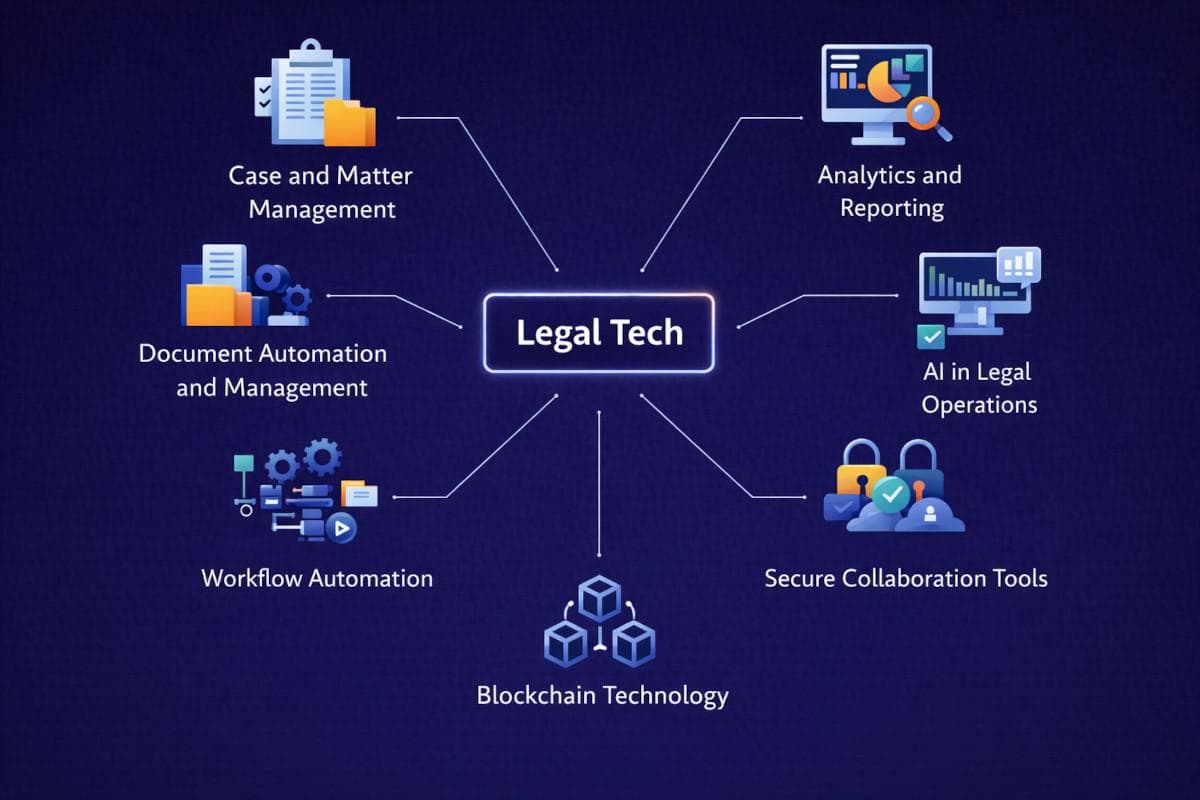
Legal technology in 2026 is no longer just about digitizing paperwork. It is about helping law firms, in-house legal teams, and legal service providers work faster, reduce risk, improve client service, and make better decisions with data.
As legal work becomes more complex and more digital, the right tools can make a major difference. From AI-assisted research to workflow automation, secure document management, and blockchain-enabled recordkeeping, legal tech is shaping how legal services are delivered.
What Legal Tech Means in 2026
Legal tech refers to software and digital systems designed to support legal work. In 2026, the focus is shifting from basic efficiency to smarter, more connected legal operations.
Key priorities include:
- Automation of repetitive tasks such as document generation, intake, and reminders
- Improved collaboration across legal teams and clients
- Better compliance tracking and audit readiness
- Secure data handling for sensitive legal information
- AI-powered insights for research, review, and decision support
Core Legal Tech Essentials
1. Case and Matter Management
Modern legal teams need a central system to track matters, deadlines, documents, tasks, and communications. A good matter management platform reduces confusion and helps teams stay organized.
2. Document Automation and Management
Legal work depends heavily on documents. In 2026, firms are expected to use tools that can:
- generate standard documents quickly
- store files securely
- control version history
- support easy search and retrieval
3. Workflow Automation
Automation helps legal teams save time and reduce human error. Common use cases include:
- client onboarding
- approval routing
- contract review steps
- deadline alerts
- compliance checklists
4. AI in Legal Operations
AI is becoming a practical part of legal work. It can assist with:
- legal research
- contract analysis
- summarizing long documents
- identifying risks and inconsistencies
- organizing large volumes of information
Used responsibly, AI can improve productivity while allowing lawyers to focus on higher-value judgment and strategy.
5. Secure Collaboration Tools
Legal teams often work with confidential information. Secure portals, encrypted communication, access controls, and permission-based sharing are now essential.
6. Analytics and Reporting
Data is increasingly important in legal decision-making. Reporting tools can help teams monitor:
- matter progress
- turnaround times
- workload distribution
- compliance performance
- operational bottlenecks
7. Blockchain Technology in Legal Tech
Blockchain is also finding useful applications in legal technology. While not a replacement for legal judgment, it can support:
- tamper-evident recordkeeping
- smart contracts
- proof of authenticity
- secure transaction trails
- improved trust in digital records
For certain use cases, blockchain can add transparency and reliability to legal processes.
Why Legal Tech Matters More Than Ever
The legal industry is under pressure to do more with less. Clients expect faster service, clearer communication, and better value. At the same time, legal teams must manage growing regulatory demands and increasing volumes of information.
Legal tech helps by:
- reducing manual work
- improving accuracy
- supporting compliance
- increasing visibility across operations
- creating a better client experience
Choosing the Right Legal Tech
Not every tool fits every team. When evaluating legal tech, consider:
- ease of use
- security and data protection
- integration with existing systems
- scalability
- customization options
- vendor support
The best solution is one that fits your workflow, not one that forces your team to change everything at once.
Conclusion
Legal tech in 2026 is about building smarter legal operations. Whether through automation, AI, secure collaboration, or blockchain-enabled solutions, the goal is the same: to make legal work more efficient, reliable, and client-focused.
If your organization is ready to modernize its legal workflow, Lexkeep provides custom legal tech solutions as well as SaaS products for legal workflow.