
Business Document Storage in 2026: A Modern Guide
Published on: (Updated on: )
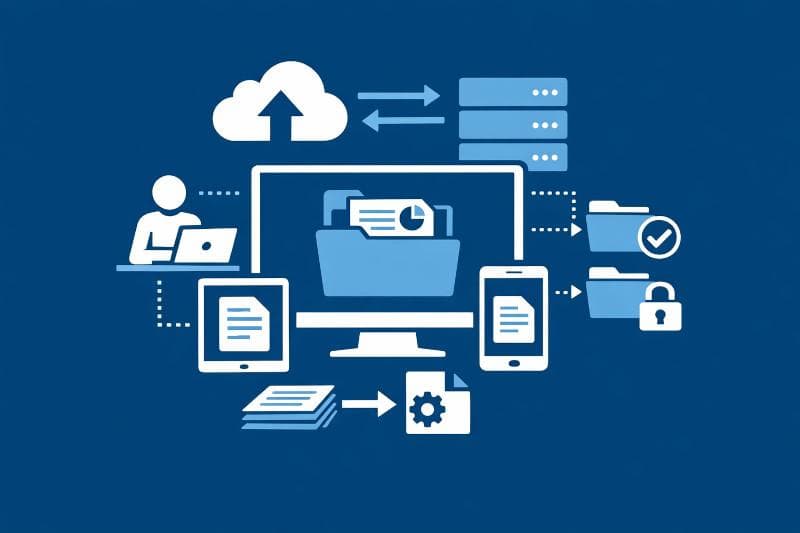
Business document storage is no longer just about keeping files in folders or cabinets. In 2026, businesses need faster access to records, stronger security, better version control, and a more reliable way to organize documents across teams while meeting growing privacy, compliance, retention, and preservation expectations.
From contracts and invoices to HR files, compliance records, board documents, and internal reports, business documents need to be stored in a way that is secure, searchable, and easy to manage. A Modern business document storage gives businesses a structured way to store, organize, protect, and track important files while improving collaboration, supporting compliance, and reducing operational risk.
What is business document storage?
Business document storage refers to the systems and processes used to keep company records organized, secure, and accessible. This can include both physical and digital storage, but modern businesses increasingly rely on digital document storage because it is easier to search, share, control, and manage at scale.
A business document storage system may be used for:
- contracts and agreements
- invoices and financial records
- HR and employee files
- compliance documents
- board and governance records
- policies and procedures
- project files
- internal reports and correspondence
The goal is not just to store files, but to make sure they can be found quickly, protected properly, retained when necessary, and managed consistently over time.
Why business document storage matters in 2026
As businesses become more digital, document volume continues to grow. Teams work across locations, departments, and devices, which makes it harder to manage records through manual or fragmented systems.
In 2026, business document storage matters because companies need to:
- reduce time spent searching for files
- improve document security
- support data privacy and security compliance
- maintain version control
- manage access permissions
- prepare for audits, disputes, or compliance reviews
- reduce reliance on paper-based systems
- keep important records available when needed
- preserve records in a more defensible way
Without a structured storage system, businesses often lose time, duplicate work, and increase the risk of document loss, unauthorized access, or incomplete records.
Why unofficial communication channels create risk
One of the biggest document and record-keeping risks for modern businesses is the use of unofficial communication channels for business activity. When employees share files or conduct business through personal email, consumer messaging apps, or unapproved tools, important records can become fragmented, inaccessible, or impossible to preserve properly.
This creates problems for businesses that need to maintain reliable records for legal, compliance, audit, or regulatory purposes. If documents, approvals, or business communications are spread across unofficial channels, the organization may struggle to show what was shared, when it was shared, who had access, and whether the record remained complete.
For businesses operating in regulated or high-risk environments, official systems with controlled storage, audit trails, and secure sharing are increasingly important.
Common problems with business document storage
Many businesses still face the same document storage issues year after year. These problems often become more serious as the organization grows.
Scattered files
Documents may be spread across email inboxes, shared drives, cloud folders, desktops, and messaging apps. This makes it harder to know where the latest version is stored.
Poor version control
Teams may work from different copies of the same file without a clear record of which version is current or approved.
Weak access control
Sensitive files may be accessible to too many people, while the right people may struggle to find what they need.
Slow retrieval
Without a structured system, employees waste time searching for contracts, reports, approvals, and archived records.
Inconsistent organization
Different teams may use different naming conventions, folder structures, and storage habits, making document management harder across the business.
Compliance and audit risk
If records are incomplete, hard to retrieve, or poorly tracked, the business may struggle during audits, investigations, disputes, or regulatory reviews.
Digital vs physical document storage
Physical document storage still exists in many businesses, but it has clear limitations. Paper files take up space, are harder to search, and can be difficult to share across teams. They are also more vulnerable to loss, damage, and inconsistent filing practices.
Digital document storage offers a more practical alternative. It allows businesses to:
- store files centrally
- search documents quickly
- control access more effectively
- share files securely
- maintain version history
- support remote access
- reduce paper dependency
- preserve records more consistently
For most modern businesses, digital storage is now the more efficient and scalable option.
What to look for in a business document storage solution
A strong business document storage solution should do more than hold files. It should help teams organize records, protect sensitive information, and maintain confidence in the integrity and availability of important documents.
Key features to look for include:
- centralized document storage
- secure cloud access
- folder or workspace organization
- version control
- document search
- access permissions
- audit trails
- secure file sharing
- backup and recovery
- retention controls
- legal hold workflows
- WORM storage for defensible preservation
- encryption for stored and shared files
These features help businesses move from basic file storage to a more structured document management approach.
Why audit trails, legal hold, and WORM-style retention matter
For many businesses, storing a file is not enough. They also need to know what happened to that file over time. An audit trail helps show who accessed a document, when it was uploaded, when it was changed, and how it was handled. This is especially useful during internal reviews, compliance checks, investigations, and disputes.
Legal hold adds another important layer for businesses that need to preserve records connected to disputes, investigations, or regulatory matters. When documents may later be reviewed or relied on, legal hold helps ensure they are preserved appropriately and not altered or deleted during critical periods.
WORM-style retention further strengthens document preservation. By supporting write-once, read-many storage, businesses can keep important records retrievable and less vulnerable to improper alteration or deletion. This is particularly valuable for legal, compliance, governance, and evidentiary records that may need to be relied on later.
Together, audit trails, legal hold, and WORM-style storage help create a more defensible record-keeping environment.
Best practices for business document storage
Even with good software, businesses still need clear document management habits. A few practical steps can make storage systems much more effective.
Create a consistent structure
Use a clear folder, workspace, or category structure so documents are stored in predictable locations.
Standardize naming conventions
Consistent file names make documents easier to search and identify.
Control access carefully
Not every employee should have access to every file. Use permissions to limit access to sensitive records.
Keep versions organized
Make sure teams know which version is current and how updates should be handled.
Review storage regularly
Archive outdated files, remove duplicates, and check whether records are still stored in the right place.
Protect sensitive documents
Use encryption, secure sharing, and access controls for confidential business records.
Plan for retention and retrieval
Important records should remain accessible for as long as the business needs them, especially for legal, financial, or compliance purposes.
How small businesses can improve document storage
Small businesses often start with simple tools such as email, desktop folders, and generic cloud drives. While this may work at first, it becomes harder to manage as the business grows.
A better approach is to centralize important records early. Small businesses can improve document storage by:
- storing contracts, invoices, and key records in one system
- reducing reliance on email attachments and unofficial file-sharing habits
- using secure cloud storage instead of local-only files
- organizing documents by client, project, or business function
- setting clear access rules
- choosing software that can scale with the business
This helps avoid the confusion that often comes from trying to fix document sprawl later.
How document management software supports business document storage
Document management software gives businesses a more structured way to store and manage files. Instead of relying on disconnected folders and manual processes, teams can work from a centralized system designed for security, organization, retention, and retrieval.
This helps businesses:
- keep documents in one place
- improve version control
- manage permissions more effectively
- share files securely
- retrieve records faster
- maintain better visibility into document history
- support privacy and compliance requirements
- preserve records more defensibly over time
For businesses handling sensitive records, document management software also supports stronger security and a more reliable record-keeping process.
How Lexkeep helps businesses store and manage documents
Lexkeep helps businesses modernize document storage with secure cloud-based document management, controlled file sharing, audit trails, and structured record keeping. It is designed for legal, compliance, and business teams that need more than basic file storage.
With Lexkeep, businesses can:
- store documents securely in the cloud
- organize records in structured workspaces
- manage access with permissions and controls
- share files securely with internal and external stakeholders
- maintain version history and document visibility
- support stronger record integrity with blockchain-backed record keeping
- protect sensitive files with encryption and optional end-to-end encryption for high-risk records
- preserve important records with WORM-style retention
- apply legal hold workflows where records need to be preserved for disputes, investigations, or compliance matters
- maintain audit trails for accountability, review, and compliance readiness
For businesses that need a more secure and organized way to manage important documents, Lexkeep provides a practical alternative to scattered folders, unofficial communication channels, and generic storage tools.
Conclusion
Business document storage in 2026 is about more than saving files. It is about making records secure, searchable, organized, and easier to manage across the business while supporting privacy, compliance, and defensible record keeping.
As document volume grows and teams become more distributed, businesses need a better way to store and retrieve important records without losing control over security, version history, or retention. A modern document storage system helps reduce risk, improve efficiency, and support better day-to-day operations.
Lexkeep helps businesses take a more structured approach to document storage through secure cloud document management, controlled sharing, audit trails, legal hold workflows, WORM-style retention, and stronger record integrity.